I recently watched Oscar-winning director Kathryn Bigelow’s newest film, A House of Dynamite, on Netflix. It chronicles a very short period of time during which the United States finds itself in a nuclear crisis. This essay touches very lightly on a key plot point in the film, so if you consider that to be a minor spoiler, then MINOR SPOILERS FOLLOW. But the movie is just the context for the point I want to make.
It focuses on the chain of command in terms of our nuclear monitoring and deterrence. It’s one of those movies where the plot effectively is the main character, and necessarily so. As I watched it, I couldn’t help but think that it’s basically the The Day After of the modern area. It ought to scare you. It sure as hell scared me (more on that in a moment).
The shadow of nuclear war has followed many of us around for our entire lives. We came very close a few times, and those are just the situations we know about. The key principle behind nuclear deterrence is mutually assured destruction; any nation that launches a nuclear weapon guarantees an in-kind response from the target nation and/or its allies, resulting in the annihilation of both (and probably everybody but Mark Zuckerberg). The movie does a brilliant job of introducing a scenario in which this doesn’t necessarily apply.
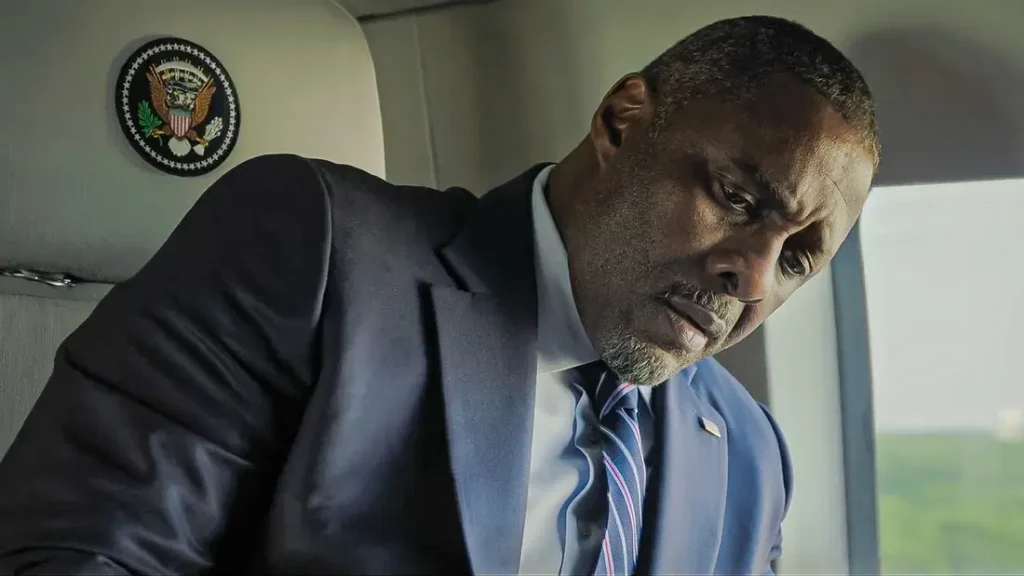
Ultimately, the President of the United States (Idris Elba) must make an impossible decision that will affect not only millions of lives, but the course of human history. And he only has minutes in which to make it. It’s noted that not only have there been no tabletop exercises covering this scenario, but there have been precious few at all. Even if there had, though, it wouldn’t make the decision any easier, and that’s the point. The film makes clear, subtly but powerfully, that the system ultimately comes down to one flawed human making a decision too big for anyone to make. It’s not simply unfair — it’s a kind of madness.
But since that’s the system, the president may have to grapple with a set of knowns and unknowns that mostly cancel each other out. If it was my job to choose such a person for that job, I’d want him (acknowledging it could and frankly should be a her, though probably not in my lifetime) to wrestle with it. I’d want him to be overwhelmed by “yeah, buts.” I’d want him to feel the full weight of the decision and act with care and discernment. At the very least, I’d want him to value concrete, actionable fact over opinion, speculation, and general 21st-century bullshit. I don’t think that’s too much to ask.
We face an epidemic of surety. The great screenwriter William Goldman said it perfectly in his nonfiction book, Adventures in the Screen Trade: Nobody knows anything. The more apt way to phrase it would be, “Nobody knows anything.” A House of Dynamite exposes the dangers of surety by yanking it from the characters’ hands one at a time like a forbidden toy. The knowns aren’t all that useful. Surety feels better than naked vulnerability, but it’s just one of the many comforting lies we tell ourselves.
Because surety is ultimately about comfort. Science is the process of establishing surety through rigorous examination. Faith is a stand-in for surety. Either you know, or you feel like you know, and that makes you feel a little more grounded. They both have their place, but they’re not the same.
The breadth of human knowledge, currently at our fingertips, was borne on the backs of people whose curiosity led them to facts, evidence-based best guesses, or tenets of faith. But now, most of the world has spent the past 20+ years learning from a resource that anyone can change, and anything that doesn’t either please or outrage us will likely escape our notice. In fact, unearned surety offers tantalizingly and breathtakingly short paths to power and influence. If you act sure enough for long enough, people who find surety alluring will find you alluring.
But surety, unless arrived at through science or careful consideration, is at best reflective of a lazy mind, and at worst reflective of one that can only view the world through its own lens and therefore is incapable of empathy. And so we simply act sure. In the real world, most important decisions are based on incomplete information and a wide range of unknowns. Being decisive and being sure aren’t the same. Can you imagine a sitting U.S. president being asked a tough question and saying, “Well, to be honest with you, I’m just not sure. But I’m going to weigh the facts, make the best decision I can, and explain it in layman’s terms to the American people. That’s the job.”
Can you imagine???
I can’t, and that’s why this movie shook me. The Day After was scary because it visualized the future worst-case scenario that two generations could only imagine through grainy filmstrips about ducking and covering. A House of Dynamite made me really consider whether our leaders are smart enough, moral enough, and secure enough in their lack of surety to balance strength with discernment. I think they’re far more likely to go, “Screw it. Let’s wipe those fuckers off the map!!” and slap the button than to contend thoughtfully with what they don’t know. In fact, I posit that many were chosen for their surety instead of a demonstrated capacity for keen judgment. The ability to posture on social media, bloviate on corporate-run news programming, or otherwise be a twit pays well in the only currencies that matter right now: attention and dopamine. That’s where we’re at.
Maybe the scenario in the film, plausible though it is, will never come to pass. But we’re in a place now where there are equally world-changing forces afoot. AI. Quantum computing. Synthetic biology. CRISPR. Fusion. I’m only a casual student of history, but I think what’s happening now is like fire, the wheel, the bronze age, the industrial revolution, antibiotics, and the internet all happening at roughly the same time. Not only do we need people who can understand the magnitude of the moment, but who possess the wisdom and courage to meet it. Knowing what you don’t know is wisdom. Surety slams the door on curiosity and discernment right when we need them the most, and that could end really badly. But there’s no way to be sure.